Table Of Content
- What to Know About the Connection Between Hair Relaxers and Uterine Cancer
- Societal Pressure to Straighten Hair
- Want to Lower Your Risk for Cancer?
- Preventing Uterine Cancer
- Why is there concern that hair dyes may cause cancer?
- Study Finds Possible Link Between Hair Straightening Chemicals and Uterine Cancer
- People who use hair straightening chemicals have an increased risk of cancer

Recent studies have linked hair dye and hair straightening chemicals to breast cancer, showing a 60% increase in risk for some women who use them. People who use hair dyes frequently as part of their job, such as professional hairdressers, likely have higher exposures to potentially harmful chemicals in these products than people who have their hair dyed in a salon or who dye it at home (that is, “personal users” of hair dye). Thus, studies have been conducted to understand both exposure to hair dyes in the occupational setting and exposure from personal use. The recent study by the National Institutes of Health links a commonly used hair product and cancer. Researchers found women who use chemical hair relaxers more than 4 times a year are 2 times more likely to get uterine cancer than those who don’t. “We estimated that 1.64% of women who never used hair straighteners would go on to develop uterine cancer by the age of 70, but for frequent users, that risk goes up to 4.05%,” study leader Alexandra White of the US National Institute of Environmental Health Safety said in a statement.
What to Know About the Connection Between Hair Relaxers and Uterine Cancer
Our team is made up of doctors and oncology certified nurses with deep knowledge of cancer care as well as journalists, editors, and translators with extensive experience in medical writing.
Societal Pressure to Straighten Hair
“There is evidence that products containing these chemicals are disproportionately found in hair care products marketed to Black women, which wrongly reinforces healthcare disparities,” Bunick said. I’m glad that more recently we’ve seen a movement toward natural hair and embracing our natural textures. I don’t think many people understand the potential harms from chemical straighteners. African American women who used hair dye every 6-8 weeks were 60% more likely to develop breast cancer. If you really want to reduce your risk of uterine cancer, there are other factors that have a much greater impact on uterine cancer than relaxers. The type of uterine cancer that commonly arose in the study supports the theory that hormonal disruption is behind the increased risk.
Want to Lower Your Risk for Cancer?
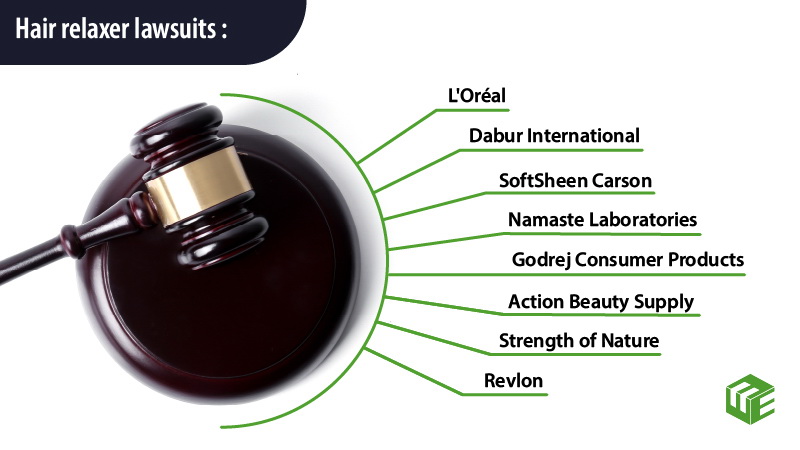
Just days after the study was released, a 32-year-old Black woman from Missouri, Jenny Mitchell, filed a lawsuit against L’Oréal, Strength of Nature, SoftSheen Carson, Dabur International, and Namaste Laboratories – all makers of chemical straighteners and hair relaxers. She got her first relaxer around age eight, amid social norms about having “sleek, nice, laid hair”, Mitchell said. Now, as a uterine cancer survivor who has undergone a hysterectomy and premature menopause, Mitchell cites relaxers as the reason she will never be able to bear children. This risk was also independently identified in a 2022 analysis of more than 10 years of data collected in the National Institute of Environmental Health Sciences’ Sister Study, a long-term study of nearly 34,000 women whose sisters have had breast cancer. Both the Black Women’s Health Study and the Sister Study have also found connections between women who used hair relaxers and an increased risk of breast cancer. Such racist standards, which in essence required many Black people to straighten their hair, are why relaxers and chemical hair straighteners exist at all, says Jasmine McDonald, a Columbia University epidemiologist who has studied the heath impacts of hair products.
Do hairdressers and barbers have an increased risk of cancer?
If it seems like your hair isn't growing, it's possible that it's breaking at the same rate (or faster than) it grows. "You’ll start to notice uneven lengths or areas where the ends look thinner than the base and mid strand," he explains. "A great way to prevent this would definitely be using Mizani’s Press Agent as a regimen between relaxers and also making sure that you protect your hair while sleeping with a satin scarf or pillowcase."
Preventing Uterine Cancer
Experts Link Multiple Cancers To Harsh Chemicals In Hair Relaxers - Levin Law - Levin Papantonio
Experts Link Multiple Cancers To Harsh Chemicals In Hair Relaxers - Levin Law.
Posted: Wed, 08 Nov 2023 08:00:00 GMT [source]
Those with family histories of uterine cancer can also speak to their doctors about genetic testing to identify potential higher risks for certain cancers. U.S. law does not require the Food and Drug Administration to approve cosmetic products and ingredients, other than color additives, before they go on the market, according to the FDA website. However, the FDA announced last week that it would propose a ban on hair-straightening and hair-smoothing products containing formaldehyde. But if you constantly find short hairs lying around right after styling, there's a good chance it's just breakage. Shorter also stresses that there are many potential causes of breakage, that may not be directly related to your relaxer.
Why is there concern that hair dyes may cause cancer?
What I really want people to understand is that we always need to look at ways that we can try to prevent or decrease our risk of developing cancer. Discontinuing the use of chemical straighteners and relaxers may be a way to decrease that risk. Because hair straighteners and relaxers contain varying compositions of chemicals, future studies will try to narrow down which chemicals have specific health impacts. Chemical hair relaxers contain endocrine-disrupting chemicals, which can disrupt the functions of the endocrine system (which includes the thyroid, ovaries, pancreas and adrenal glands) and affect hormone levels.
Study Finds Possible Link Between Hair Straightening Chemicals and Uterine Cancer
“Because Black women use hair-straightening or relaxer products more frequently and tend to initiate use at earlier ages than other races and ethnicities, these findings may be even more relevant for them,” Dr Che-Jung Chang, a co-author of the study, said in a statement. Bernadette Gordon, who used chemical relaxers from around 1983 to 2015, believes they caused her to develop breast and uterine cancer. According to her lawsuit, she was diagnosed with breast cancer in 2017 at age 44, underwent six months of aggressive chemotherapy and had a double mastectomy in March 2018. In 2021, she was diagnosed with uterine cancer and underwent a hysterectomy, followed by six months of chemotherapy and radiation.
Are chemical hair relaxers causing cancer in Black women? - REVOLT
Are chemical hair relaxers causing cancer in Black women?.
Posted: Mon, 17 Jul 2023 07:00:00 GMT [source]
These include aromatic amines, which were used as dye intermediates in early permanent hair dye formulations. The researchers did not find links between uterine cancer and the use of other hair products, including hair dyes, highlights, and perms. Some studies have found that individuals who apply permanent hair dye themselves at home have a higher breast cancer risk than those who have it applied by a professional (17, 18). Thousands of Black women have also claimed that hair relaxers from L’Oreal were harmful to their health, including a group of Black women who sued L’Oreal and other companies last year. One woman, Bernadette Gordon, who used hair relaxers from 1983 to 2015, experienced uterine and breast cancer resulting in a double mastectomy and a hysterectomy, she previously told NBC News.
Women who had reported frequent use of straighteners (more than 4 times in the previous year) were about 2½ times more likely to develop uterine cancer. The researchers found that women who reported frequent use of hair straightening products, defined as more than four times in the previous year, were more than twice as likely to go on to develop uterine cancer compared to those who did not use the products. L’Oréal also shared a statement from the Personal Care Products Council, a national trade association representing cosmetics and personal care products companies, in response to the study, stating that the study did not prove that the products or their ingredients directly caused uterine cancer. It also states that all cosmetics products and their ingredients, including hair straighteners and relaxers, are regulated by the Food and Drug Administration.
If your hair is already on the thinner side, it's important that you speak to a licensed, experienced stylist who can help provide the best treatment for your strands. But Black women will continue to wrestle with the pressure to use relaxers to feel socially accepted, according to Alice Gresham, a Philadelphia-based clinical director for outpatient mental health. The Hair Tales makes “it clear the kind of trauma that we’ve been experiencing around a physical attribute secondary to our skin, which of course is still trauma, and it’s double trauma or complicated trauma,” Gresham tells TikTok viewers in a video responding to the Hulu series. As the modern natural hair movement took off, however, Rooks began noticing Black women talking about undergoing “the big chop” to get rid of relaxed hair and make room for new, naturally curly hair to take its place, using words like “self-care” and moving towards self-acceptance.
When they are applied to the hair, we believe they may be absorbed right through the scalp and then enter the body. Through entering the body, they can then alter estrogen-dependent pathways — processes that determine and regulate the amount of estrogen in the body — which can lead to endometrial tumors. For a long time, straight hair has been held up as the standard, especially in the workplace, and historically, many Black women conformed to this standard by chemically straightening or relaxing their hair. Many get their hair relaxed for the first time as young children; it’s almost like a rite of passage. The other types of hair dyes, known as semi-permanent and temporary hair dyes, do not involve such chemical reactions. Many Black women have consulted with attorneys to sue Revlon, Just for Me and other cosmetics companies, alleging their hair straighteners cause cancer, fibroids and other health problems.
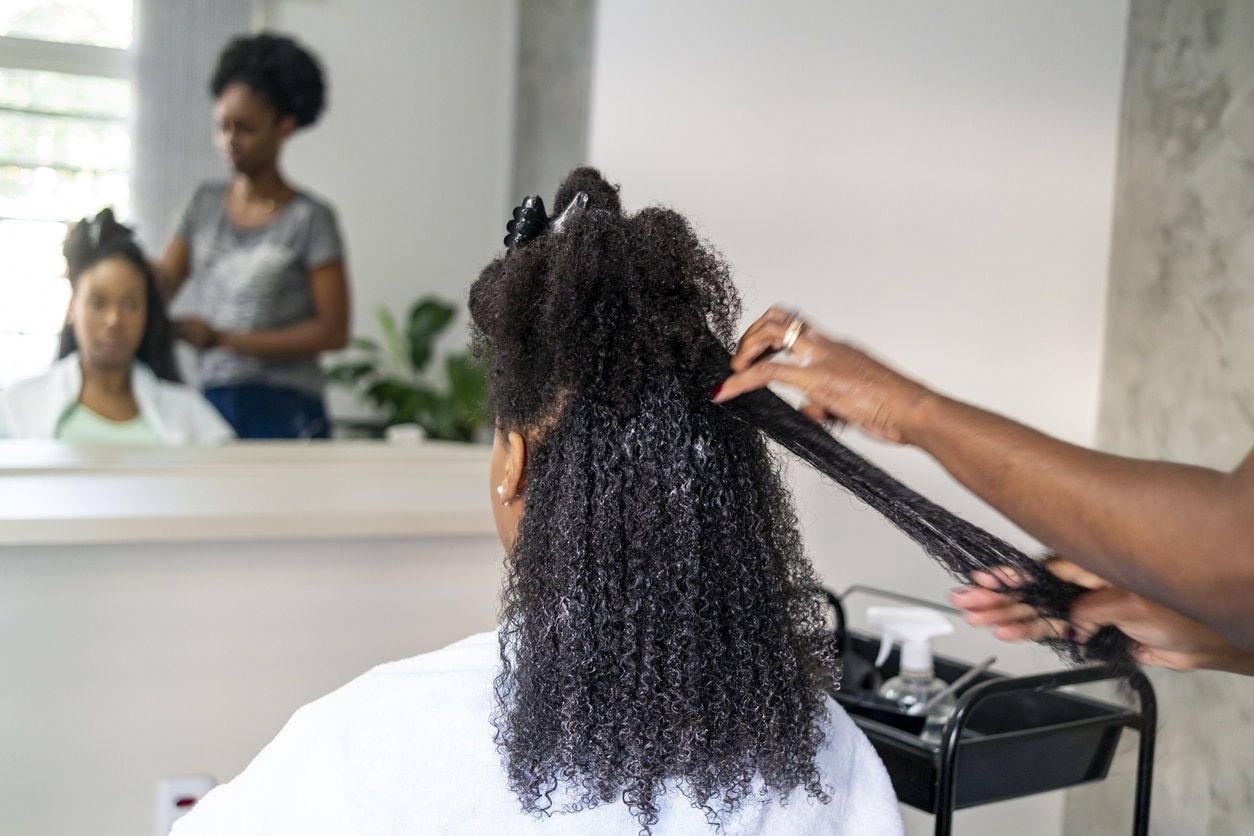
In the current study, about 60% of the women who reported using straighteners in the previous year self-identified as being Black. While the study didn’t find that the link between straightener use and uterine cancer risk was different by race, the effects may be greater for Black women because they’re more likely to use these products. Relaxers and hair straighteners are cream- or lotion-based formulas that contain chemicals that are applied to the hair for a certain amount of time to change curlier textures to straight or wavy textures.
Three years ago, Rhonda Terrell was diagnosed with an aggressive form of uterine cancer that has since spread to her abdomen and liver. She underwent a radical hysterectomy — the removal of the uterus, cervix, ovaries and fallopian tubes — and tried to come to terms with the way the disease had altered her life. You can also ask your salon professional if the products they use contain formaldehyde or if there’s an ingredient list you can look at. In the short-term, formaldehyde exposure can lead to irritation of skin and airway membranes, which can trigger asthmatic reactions and other breathing problems, said Kleinman. “The heat releases formaldehyde as a gas,” explained Michael T. Kleinman, a professor of environmental toxicology at the University of California, Irvine. The study findings were published on October 17, 2022, in the Journal of the National Cancer Institute.
There are many potential causes of thinning hair that may not be related to your relaxer, Alexander explains. Still, relaxer damage and over-processing can contribute to hair thinning over time if maintained incorrectly. Shorter says that stylists should focus on lightly loosening the curl, versus making the hair stick straight to avoid over-processing and thinning out hair over time. The agency has warned consumers since 2010 about the potential health risks of formaldehyde exposure, especially in poorly ventilated salons where the gas can build up in the air.
“Cosmetic products and ingredients, other than color additives, do not need FDA approval before they go on the market,” according to an agency spokesperson. If a product has been adulterated or misbranded, consumers can report it to the FDA. So Baum and his wife got to work developing a way to straighten hair without the adverse effects of the lye, no-lye, thioglycolate and formaldehyde-derived straightening products. He spent months testing out different chemical mixtures and applying them to hair swatches. Baum focused his attention on compounds that work at vinegarlike levels of acidity, as opposed to many existing methods that operate on the alkaline end of the pH spectrum. Human cells and other biological molecules can handle some acidity, he says, but they have greater difficulty surviving alkaline environments.


No comments:
Post a Comment