Table Of Content
- What to Know About the Health Risks of Chemical Hair Straighteners
- Dryness
- Get The Latest Health and Wellness News
- What can I do if I suspect my health has been put at risk by using chemical hair straighteners?
- Chemical Relaxers and Hair-Straightening Products: Potential Targets for Hormone-Related Cancer Prevention and Control

Rates of uterine cancer are still relatively low, accounting for 3.4% of estimated new cancer cases this year, according to the National Cancer Institute. Rates of uterine cancer in the U.S. have been increasing, however, especially among Black women. White said the study showed Black women were disproportionately more likely to use hair straighteners. The study found that 1.64% of women who never used chemical hair straighteners or relaxers would go on to develop uterine cancer by the age of 70, and for frequent users, that risk more than doubles, increasing to 4.05%.
What to Know About the Health Risks of Chemical Hair Straighteners
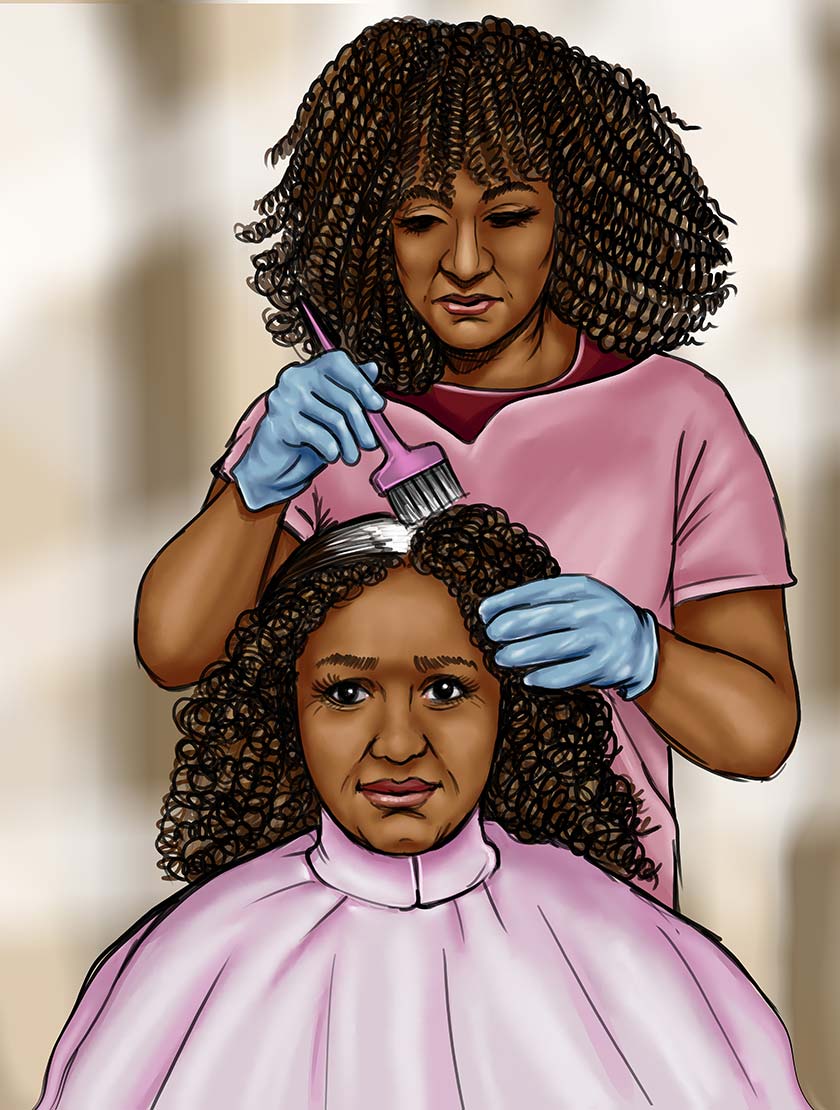
From quick indicators, like burning, to more concerning symptoms like burns or sores, check out some indicators that could mean your relaxer is damaging your hair and tips on preserving the health of your hair if you regularly get perms. “It’s about time,” said Dede K. Teteh, an assistant professor of public health at Chapman University. A UVA Health primary care doctor can help you learn all the ways you can stay healthy and prevent cancer. Debrosse Zimmermann said the panel’s decision “recognized the clear benefits of centralizing the hair relaxer litigation”, adding that she expects many more firms to file their cases in the coming weeks.
Dryness
One study published in 2021 found that 3% of non-Hispanic white women reported hair straightener use during adolescence compared to 75% of Black women, Kleinman highlighted. This method straightens wavy hair through repeated brushing and flat-ironing while certain products are applied. The ingredient at work in Brazilian blowouts is methylene glycol, which emits gaseous formaldehyde when heated. The formaldehyde temporarily locks hair in place to achieve long-lasting straightening—but it’s a known carcinogen. “Many studies show that maintaining a healthy weight, exercising, reducing your alcohol intake and eating a healthy diet significantly reduce your risk for breast cancer,” says Brewster. If you want to reduce your risk for breast cancer and other cancers, the best thing to do is to follow a healthy lifestyle.
Get The Latest Health and Wellness News
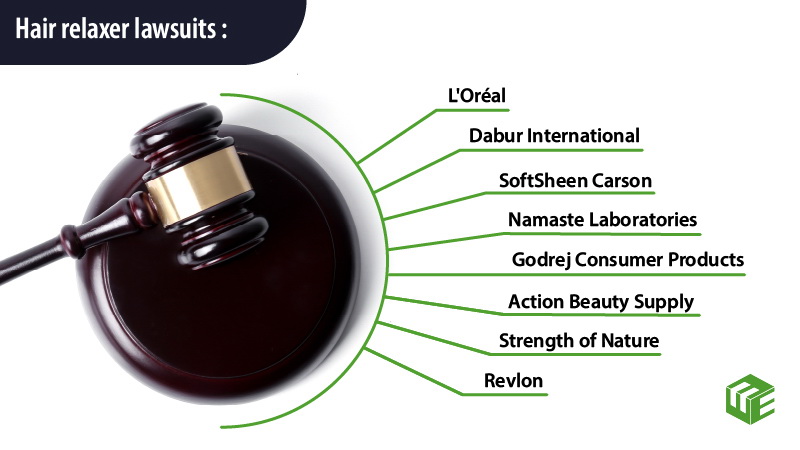
The lawsuits allege the companies knew their products contained dangerous chemicals but marketed and sold them anyway. You don’t necessarily have to have hair that is speaking to Black pride as much as an aesthetic of an afro, but that’s looser and wavy,’” Rooks says. The 2000s ushered in a generational change as young people prioritized versatility, she says, so if they wanted to wear straight hair one day and a pink wig or locs the next, everything was fair game.
Victim blaming and beauty standards
"Over-processing, poor maintenance, tension, adding hair color, can all contribute to breakage," she says. "You have to make the mental and physical commitment to having a relaxer and you need to find a stylist that cares about the health of your hair, versus the style." Applying chemicals to already thin hair or damaged follicles can eventually lead to thinning or hair loss.
Hair Relaxer Cancer Lawsuit (Apr 2024 Update) - Schmidt & Clark, LLP
Hair Relaxer Cancer Lawsuit (Apr 2024 Update).
Posted: Wed, 13 Mar 2024 07:00:00 GMT [source]
And as a result, Black people have been fired from their job for simply wearing their natural hair. A nationwide movement has emerged in recent years to prohibit hair-based discrimination through the CROWN Act (which stands for Creating a Respectful and Open World for Natural Hair). Twenty-four states have so far adopted their own version of the CROWN Act, but a federal version has yet to survive the Senate. Until such a nationwide law exists, people with curly or kinky hair may not feel safe wearing styles that are natural or that keep their hair and scalp healthy.
More research needs to be done before we can say for sure that chemicals in hair products cause cancer. Experts and consumers have expressed concerns about a link between hair products and breast cancer for years. Other studies have shown that hair relaxers can cause fibroids and an early onset of puberty in girls, Bertrand said.

As a result, Black women have turned to straightened or relaxed hair as an attempt to advance socially and economically. But regardless of how we wear our hair, we should be able to show up in the world without putting our health at risk, and manufacturers should be prevented from making a profit at the expense of our health." "Sitting under a heated hooded dryer for 30 minutes really makes a humongous difference."
In addition to the October study, a 2021 Oxford University Carcinogenesis Journal study found that frequent, long-term use of lye-based relaxers could have serious health effects, including breast cancer. And Dr Tamarra James-Todd at Harvard University’s Chan School of Public Health has found hormone-disrupting chemicals in half of hair products marketed to Black women, compared with 7% for white women. Hair products such as dye and chemical straighteners/relaxers contain a number of chemicals that may act as carcinogens or endocrine disruptors and thus may be important for cancer risk, White said. Straighteners in particular have been found to include chemicals such as phthalates, parabens, cyclosiloxanes and metals and may release formaldehyde when heated, she said. L’Oréal did not return a request for comment as to whether its products could or did include these ingredients. The researchers did not collect information on brands or ingredients in the hair products the women used.
Over the past decade, chemical relaxer sales to hair professionals and salons declined, from $71m in 2011 to $30m in 2021, according to the market research firm the Kline Group; Mitchell is one of many Black women who have foregone relaxers and she wears her hair naturally, cut closely to her head. Chemicals that release formaldehyde when heated include, but are not limited to, timonacic acid, dimethoxymethane, or decamethyl-cyclopentasiloxane. For example, chemicals that are synonyms for formaldehyde include formalin, methanal, methanediol, or formaldehyde monohydrate, according to the OSHA. Sometimes formaldehyde isn’t explicitly listed on the packaging label, and, in certain circumstances, there may be other chemicals that, when heated, can release the carcinogen. “I sincerely hope lawmakers in Congress continue to fight for improved quality control in the manufacturing of over the counter personal care products,” he said.
In this prospective cohort of mostly White women without breast cancer who had at least 1 sister diagnosed with the disease (14), participants completed a questionnaire at baseline that included an assessment of hair product use and frequency of use within the prior 12 months. After an average follow-up of 10.9 years, 378 incident cases of uterine cancer were identified. These findings were consistent for type I endometrial cancers; however, associations for type II cases were unreliable because of small sample sizes. Emerging data show that use of permanent hair dyes, chemical relaxers, and straightening products might contribute to increased risk of hormone-related cancers (1-5) and potentially breast tumors with features indicative of more aggressive phenotypes (6). Given the wide use of these products globally, they are an important source of exposure to potentially harmful chemicals, including endocrine-disrupting chemicals—to which we are ubiquitously exposed (7)—and mutagenic and/or genotoxic compounds.
A hair strand is made up of long chains of keratin (the ladder’s “rails”) held together by sulfur bonds (the “rungs”) that give hair its structure and texture. Most chemical straighteners snap the ladder’s sulfur rungs, and the keratin fiber rails collapse; curly hair falls flat. Furthermore, while the researchers found a possible link between hair straightener use and uterine cancer, they did not conclude from this study that using these products causes uterine cancer.
He and his wife never settled a deal with the companies that he says approached them in the past, and the pandemic disrupted their plans to produce it themselves. Now they’re again in discussions with unspecified cosmetics companies to license the patent. American Cancer Society news stories are copyrighted material and are not intended to be used as press releases.
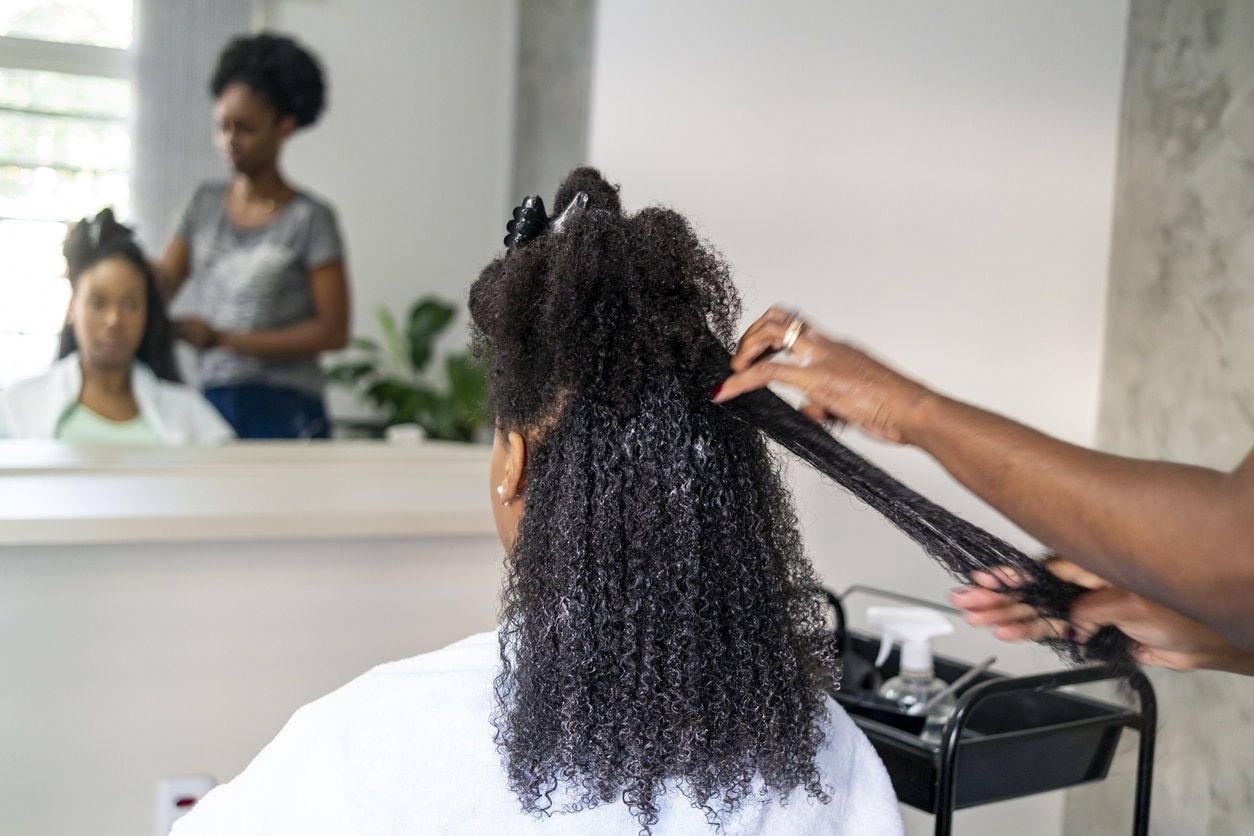
Both of these aggressive chemical agents can create a highly alkaline (high-pH) environment that can be harmful to the human body. They get inside strands to sever sulfur bonds, permanently straightening hair until fresh growth emerges. But the reactions at work can also burn the scalp, and the broken skin is then vulnerable to other potentially harmful ingredients that these products may contain, such as parabens and phthalates. If these compounds—included in many cosmetics as preservatives and fragrances—enter the body, they can disrupt the endocrine system and potentially raise the risk of reproductive cancers, explains Kimberly Bertrand, an epidemiologist at Boston University.
A new study finds that women who often use hair straightening chemicals may face higher risk of uterine cancer. Healthline could not immediately reach L’Oreal and Revlon for comment, but both companies told Reuters their products undergo rigorous safety reviews. “We do not believe the science supports a link between chemical hair straighteners or relaxers and cancer,” Revlon told Reuters. “This proposed rule would ban formaldehyde (FA) and other FA-releasing chemicals (e.g., methylene glycol) as an ingredient in hair smoothing or hair straightening products marketed in the United States,” the FDA states. Several potentially harmful hair products are linked to the racial biases that have long influenced American standards of beauty. Some of these standards, for example, have deemed Afrocentric hairstyles—such as locs and afros—ugly and unprofessional.
“To a certain extent, you have in the last 10 years started to have more conversations about hair relaxers and health, so you hear about alopecia perhaps having something to do with relaxers,” says Rooks, who sports an above-the-shoulder twist-out style for her salt-and-pepper hair. Relaxers, or perms (as they are sometimes called in the Black community because they are meant to be semi-permanent), became a staple in the 1940s, when top Black entertainers sported sleek, processed waves, suggesting sophistication as well as belonging. Before then, all kinds of products purported to straighten Black hair, but it wasn’t until the 40s that women could begin to trust over-the-counter formulations “a little bit”, according to Rooks. More research is needed to understand which products may be harmful — personal care products should help, not harm, people, Bunick said. Previous research from the Sister Study has also linked straightener use with a higher risk of breast cancer.